Author: Andrew Beaven

  • Myths of Sport Coaching — mini review

    Myths of Sport Coaching, edited by Amy Whitehead & Jenny Coe, presents a fascinating review of some of the most fervently believed myths sport coaching.

    The contributors, who use published research to explain why the various myths lack foundation, and, in many cases, go on to suggest alternative approaches, again backed by research.

    It is, perhaps, unfair to pick favourites, but for me the most interesting included:

    • The Science of Fun in Sport: Fact over Fiction — Amanda Visek & Anna Feiler
      • “Fun” is about so much more than having a lark!
    • Communities of Practice: Common Misconceptions — Diane M Culver, Tiago Duarte & Don Vinson
      • Especially resonant, perhaps, given the paucity of “community” amongst cricket coaches online.
    • The Evolving Role of the Sport Psychologist and the Myth That Their Role is to ‘Fix’ Athletes — Laura Swettenham, Kristin McGinty-Minister & Stewart Bicker
      • This highlights the importance of the psychological element in performance — it is way too central to leave it out until there is a problem!

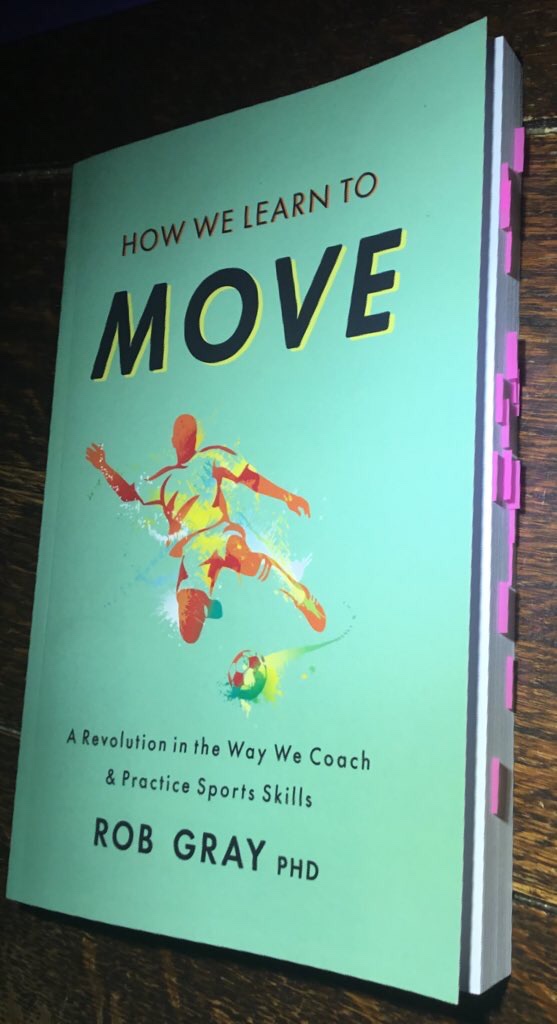
    There are also thoughtful contributions on Deliberate Practice (the myth being that 10,000 hours of Deliberate Practice is required to acquire “expertise”), early specialisation (there is now substantial evidence demonstrating that the costs for the vast majority of young people of specialising in sport too early outweights the gains), and fundamental movement solutions (a critique of the information-processing model as the pedagogical foundation for movement skill acquisition).

    I was gratified to see that none of my current beliefs about what coaching is (should be) and how it works were de-bunked! But the authors’ approach would surely have gone a long way to convincing me of their case!

    Thoroughly recommended!

  • The Spectrum of Sport Coaching Styles — mini review

    I was very taken by Mosston’s classification of teaching styles with decision making as a central defining characteristic (see Reflections on and with Mosston’s Spectrum of Teaching Styles) — when the decisions are taken (pre-delivery, delivery, post) and by whom (teacher or learner) — so I was especially interested to see how the Teaching Styles would translate to explicitly sport coaching contexts.

    In The Spectrum of Sport Coaching Styles, edited by Shane Pill, Brendan SueSee, Josh Rankin & Mitch Hewitt, Mosston’s Teaching Styles are discussed with examples from actual coaching practice.

    And I am even more convinced of the value of this theoretical approach to planning, reviewing and delivering coaching activity.

    The concept that “every act of deliberate teaching is a consequence of a prior decision” is inspiring — if we aspire to deliberate coaching (I think we should), then we need to engage in deliberate decision making first!

    I am challenged by “coach as educator”. I’m a coach, not a teacher!

    But I can see how it fits with the theory and brings it to life for the players. In addition to coaching technique, tactics etc., the coach also has a responsibility to encourage “learning about learning” (meta-learning?).

  • 2021 — My Year in Steps

    2021 — My Year in Steps

    No, I didn’t spend the year with Claire, Faye, H, Lee and Lisa from the 1990s dance-pop quintet.

    Can’t sing. Won’t dance.

    But for that, I could have been there with them, on their 2021 arena tour…

    But I have continued to record my activity via a Fitbit step counter. And the numbers don’t lie. I have been walking, a bit, in 2021, whether coaching, playing, or looking for cows.

    (more…)