I followed the proliferation of “online coaching” during the first COVID lockdown in the UK in 2020 — a lot of online demos, and quite a few “Me-Me” posts (“look at me — me!”).
For all the online “coaching”, it is, of course, impossible to tell if there was much actual learning. And no evidence, to date, of any development in online coaching beyond a straight replacement for face-to-face instruction & demonstration.
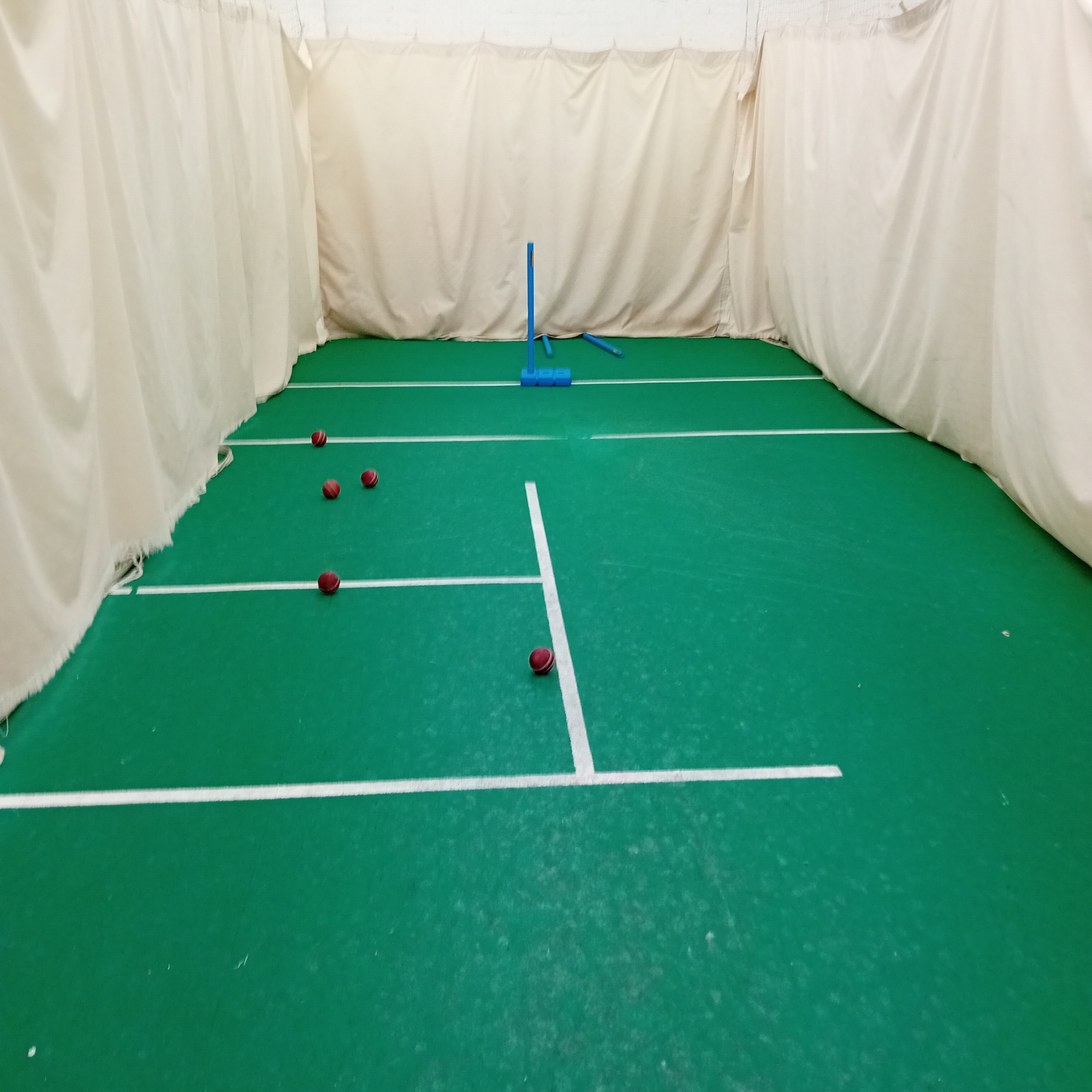
This week, I visited† the Ilford Cricket School, for the first time since I left school in 1980.
Where I, and countless numbers of local school children, have been introduced to the game since the facility opened more than 70 years ago.
The telephone number on the board by the front door has not updated since the “Big Number Change” in 2000, and some of the decor inside is possibly of the same vintage…
Ilford Cricket School, January 2024
But it’s an indoor facility where otherwise there was none back then.
Where State schools and local clubs got to practice.
It demonstrates perfectly, for me, the importance of a local hub, no matter how humble, in promoting and supporting the game.
Would the London Borough of Redbridge be host to 7 Essex “Premier” clubs, each running three or more Saturday XIs and numerous junior sides, if the Cricket School had never found a home in Ilford?
In that post, I included a set of criteria for identifying a “good” club — good, in this context, meaning one that could be entrusted with leading a local development cluster at U13.
The list originated in a discussion of a fictitious “Top 100 Clubs” feature article for one of the cricket magazines, to sit alongside their “Top 100 Schools” pieces.
I left the list as a work-in-progress, but it is, perhaps, an interesting project it its own right.
My initial list:
Retention — do players stay with the Club over time, or drift in and out again?
Accessibility & inclusion (both by ability & age — good clubs welcome late starters).
Diversity of players & coaches (contentious; needs to be context-sensitive; difficult to quantify).
Parental engagement (see above).
“Lived” coaching philosophy — do coaches “walk the walk”?
Outreach & recruitment (active or passive?).
Further down the list: games won — I do believe that winning matters!