
With the Essex Over 60s 1st XI due to play Yorkshire Vets at Bradford Park Avenue last week†, I was reminded of the recent news about the new cricket centre in Bradford, and the (then) Government’s promise of £35m funding to support “grassroots” cricket.
The talk of “16 new hubs by 2030” was, perhaps, all too reminiscent of the promise to build “40 new hospitals for the NHS”. And with the demise of the Conservative government, it might be that this funding never does come through.
But I do wonder if the emphasis on investing in building new cricket hubs was ever really the best strategy.
What is (was?) on offer — Rishi’s money
I saw the proposal glossed as “£35m for schools cricket”, which it never was.
£14m is (was) to be shared between Chance to Shine (predominantly delivering in primary schools, with a particular remit to visit schools with above-average provision of free school meals), Lord’s Taverners (disability cricket), & ACE Programme (originally specifically targeting African Caribbean Engagement).
All very deserving projects, but not directed to hard-ball play in secondary schools.
Which would have left £21m for the new hubs.
That’s £1.3m per hub, when we already knew that the new centre in Bradford (where they already owned the land) cost £1.5m.
And that £21m is capital expenditure on the 16 hubs, with nothing over for running costs.
So who pays for the lights to stay on on those dark winter afternoons, who pays for coaches, for getting schools to the hubs?
Net hire to local clubs will only raise so much. And if the hubs really are built in areas of social diversity and deprivation, as one report suggested they would be, would it be realistic to expect the local clubs to pay over the odds to fund other users?
I saw, somewhere (but can’t now find) a suggestion that the ECB and Chance to Shine were surprised by the announcement, back in, April 2024, of new government funding. Maybe it never was anything more than a pre-election stunt, and a photo opportunity for the former PM?
Even if the funding does survive the change of Government, do we really need state-of-the-art cricket hubs?
The power of local hubs
I certainly don’t mean to deny the importance of local hubs in supporting a local cricketing culture.
I have written previously of my visits to Ilford Cricket School. And it is not our only local cricket centre.
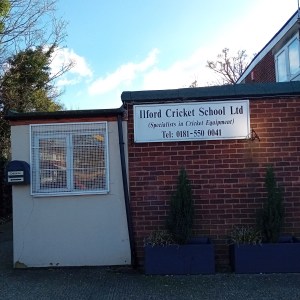
Ilford Cricket School is in the London Borough of Redbridge; neighbouring Waltham Forest is home to the Peter May Sports Centre and the Leyton Urban Cricket Hub, itself the beneficiary if a £1.7m refurbishment in 2019.
None of these facilities could claim to be state-of-the-art, but they provide ready space for off-season practice and coaching; the Leyton centre hosts an MCC Foundation Hub; the Peter May hosts winter nets and an extensive programme of indoor cricket competitions.
Lots of locals have the opportunity to play and practice cricket, year-round, at reasonable cost.
And so, the local cricket culture thrives.
Does it make a difference?
10 “senior” clubs from the Essex ECB Premier League (that’s before the recent expansion) are based in the London Boroughs of Redbridge and Waltham Forest. That’s 25% of the League membership from just two London Boroughs.
These Clubs routinely field 4 or more (adult, male) teams every Saturday. Almost all the Clubs have a long history of running junior sections, from U11 upwards; some deliver National Programmes; several (but not, perhaps, enough) host Women’s and Girls’ sections.
A few years ago, just before lockdown, Essex had 9 players born locally to the East London hubs. I’m sure they all visited one or more of the centres in their formative cricketing years, all played for local clubs which practiced in the local centres.
Where do new players come from?
Callum Murray’s Something in the Water provided a really interesting read on talent hotbeds in football — the initial development of soccer talent in South London (and elsewhere across the country) is occurring not in swanky academies and million pound centres, but in grotty “cages” (MUGAs — multi-use games areas) in council estates.
Yes, the refinement of that talent will need the academies, and coaches, and technology to support them, much like young cricketers will need access to structured development programmes and County pathways to break in to the professional game. But the “raw material” is emerging from the “cages”, from the estates, from free play.
Where does cricket talent come from?
Too often, from a very small slice of society. With the funds to afford club memberships and kit, and travel to sometimes remote pathway coaching (and coaches). Those with an existing connection to the game — a father who plays or coaches, perhaps for the lucky few, an enthusiastic school teacher.
Private schools can provide an excellent playing culture for those whose parents can afford the school fees (plus VAT), plus a few scholarship boys and girls.
The outreach provided by Chance to Shine in State Primary Schools, and by the National Programmes hosted by local clubs, is essential to spark the interest at Primary School age.
Projects like ACE, reaching out to elements of the community who are being excluded (were never included), for whatever reason.
But there is a gap between schools outreach and potential.
The Clubs provide an essential conduit. But most are run by volunteers, or on shoestring budgets (discounting the mega-clubs with their coaching “franchises”).
Players learn by playing. But what playing opportunities exist?
Playing facilities
More playing facilities are required. More non-turf pitches (NTPs). Projects like the London Cricket Trust, with their mission “to put cricket back into London’s parks”, surely need to be supported. Locally to me, they have worked with the Council to install NTPs, open to all. And they get used!
Even temporary pitches, like the FLICX pitches. Clubs should have one to roll out on the outfield for their juniors.
Ultimately, more, and better turf pitches. The announcement of ECB funding for maintaining grass wickets is encouraging, but, as with the hubs proposal, “proper” pitches cost significant time and money to maintain over the long-term.
A better way?
Perhaps the emphasis should shift from elite “pathway” to “retention & transition over time” — from school taster to National Programmes to club juniors or community play (in the domes?) to the development pathways and club seniors.
Good players need a supportive environment from which to emerge. Some will take time. Others might come late to the game.
But that might requires a very different approach to the NatProgs and Activators.
NatProg used to make a big play of connection, especially for girls, new to the game. Connection with the game, but also (more importantly) with the people you meet. You can’t fall in love with the game if you never want to go back to it.
NatProg Activators could be facilitating connection and play for the next age group.
But at the moment, when a child gets to 11 and leaves the Dynamos scheme, she has to find a Club with a qualified coach, or there’s no cricket for her.
Telling Activators that their only progression is to Foundation Coach (aka “level 1”) hugely undervalues what NatProg Activators actually (could) do, if supported and celebrated.
And undervalues the importance of play.
And what do ECB Coach Development-qualified coaches do? The cynical reply might be “preside over the rapid decline in numbers in the junior game post-13”.
Conclusion
Rather than flashy new performance hubs, perhaps it might be more productive for programmes designed to grow the game to concentrate on retention & transition over time.
Emphasising connection, and retention, and play!
And allowing talent to emerge.
† Another game lost to the weather this “summer” — cancelled a day in advance, by mutual agreement, in light of the forecast for Monday evening and Tuesday.


What do you think? Leave a reply.